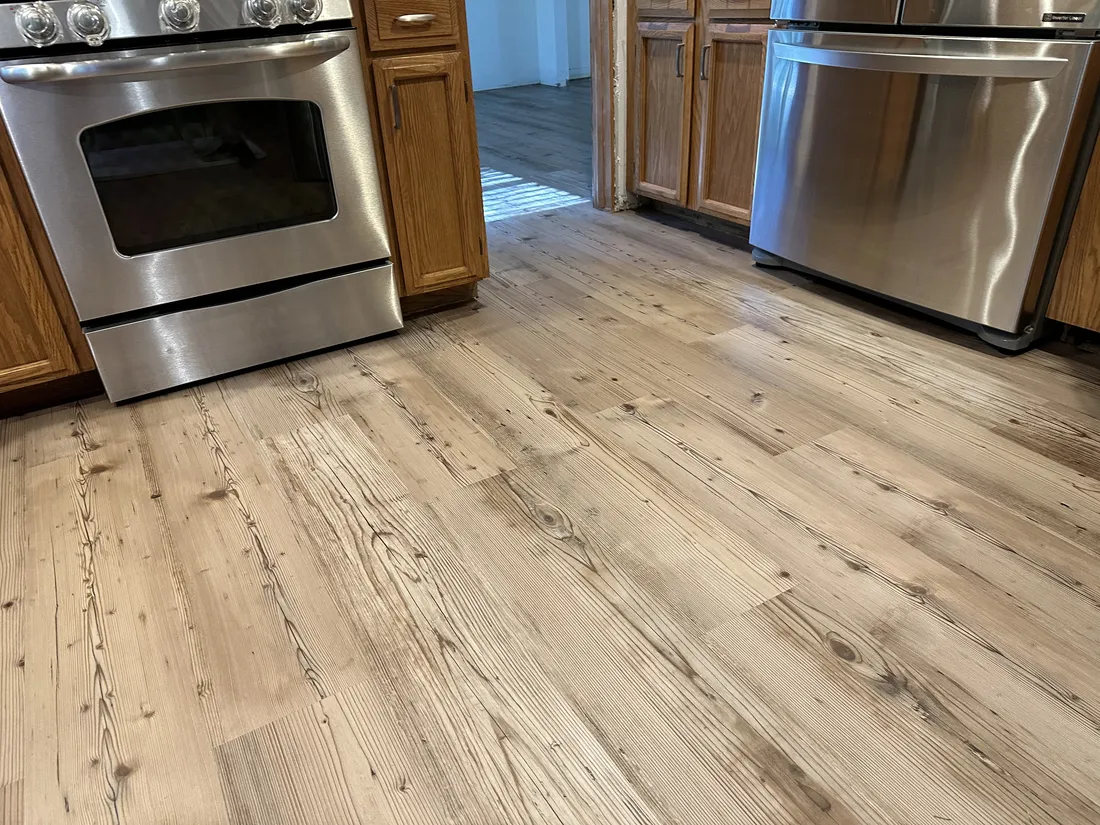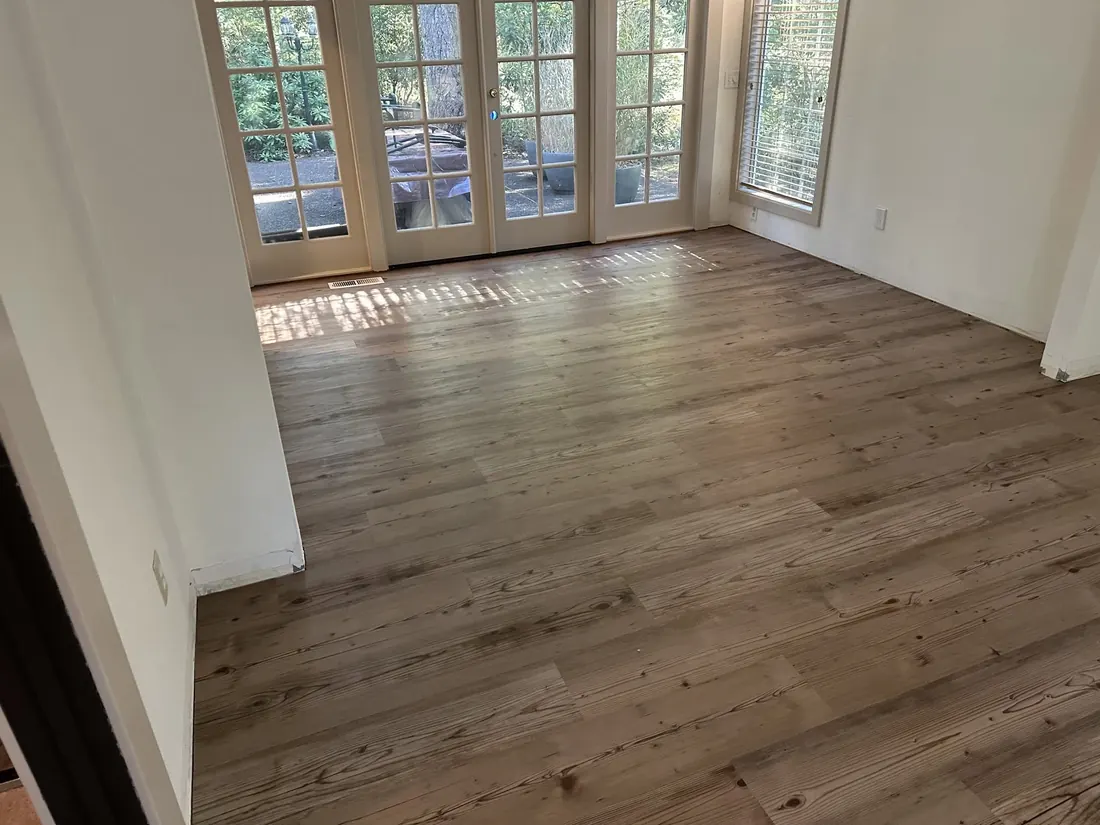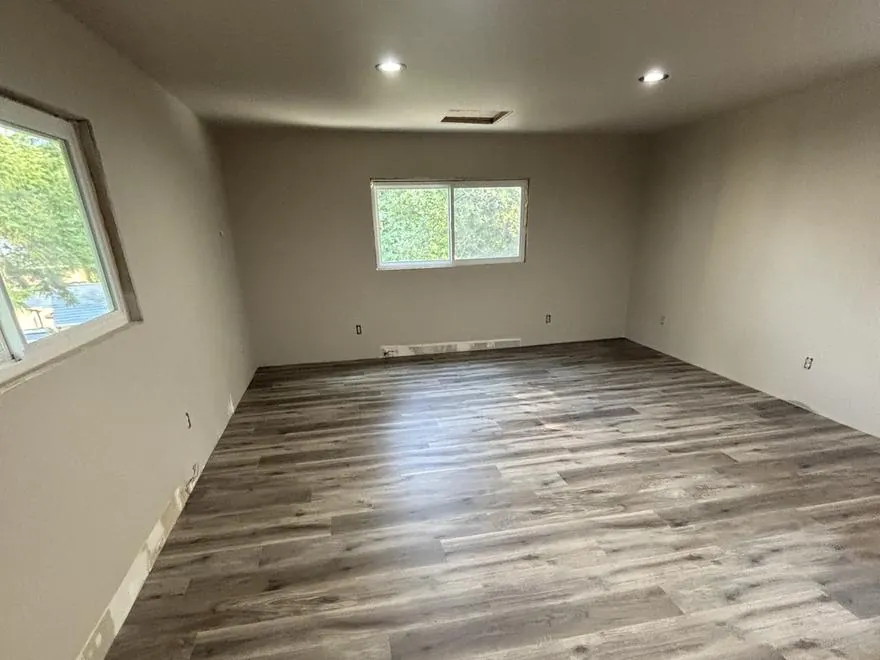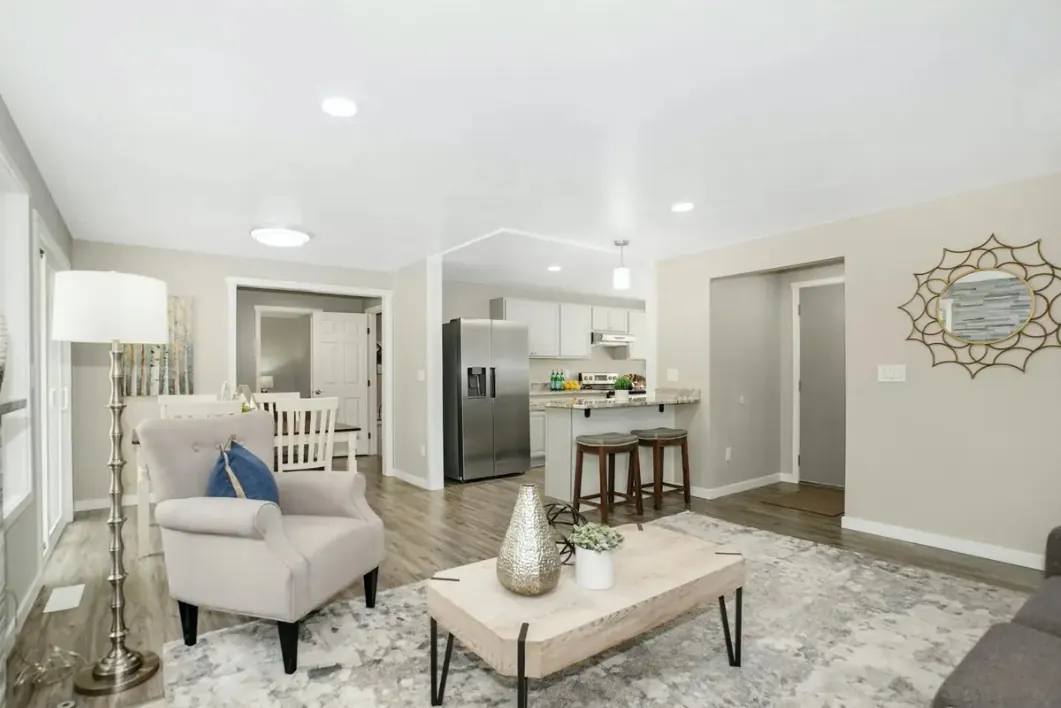
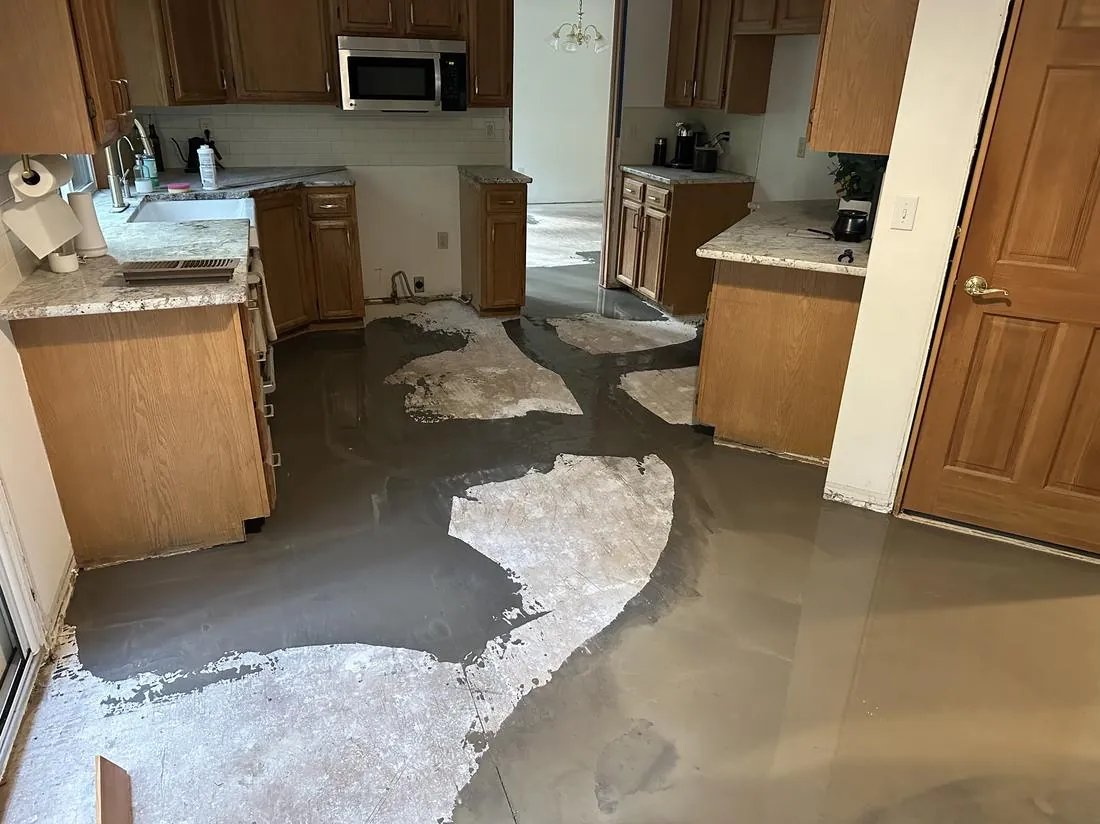
A lot of Federal Way homes are 40 to 60 years old, and a subfloor that old has lived through a few leaks, a few remodels and a lot of settling. Newer homes aren’t off the hook either, since plenty of them were framed in the rain. Either way, the subfloor has to be right before the new floor goes down.
How a subfloor job goes
- Look. Tell us what you’re noticing: squeaks, dips, soft spots, a floor that slants. If the old floor is already up, even better.
- Diagnose. Once we can see the subfloor, we figure out what’s going on and what it’ll take. You get an honest assessment and a clear estimate.
- Fix. We level or repair it (details below) so it meets the flatness your new flooring requires.
- Floor it, if you’d like. Kellie’s installs every type of flooring. Or we hand it back to your installer, ready to go.
What we fix
- Uneven concrete: spot leveling or a full self-leveling pour, common when carpet comes up.
- Squeaky floors: re-securing a subfloor that’s worked loose from the framing.
- Warped or twisted plywood: sanding high spots and filling low ones.
- Dips and mushy spots: cutting out water-damaged sections and replacing them with new plywood.
- Slanted floors: leveling basements and building up wood subfloors, with framing repair when that’s the real problem.
Other contractors stop here. We don’t.
It happens more than you’d think: the old floor comes up, the installer sees trouble and says they can’t continue until the subfloor’s fixed. Not every flooring company does subfloor work. Kellie’s Remodel & Restoration does, and we’ve been doing it for over 30 years.
Call (206) 300-3156 for a diagnosis and a free estimate.